House Survey Cost in London (2026 Guide)
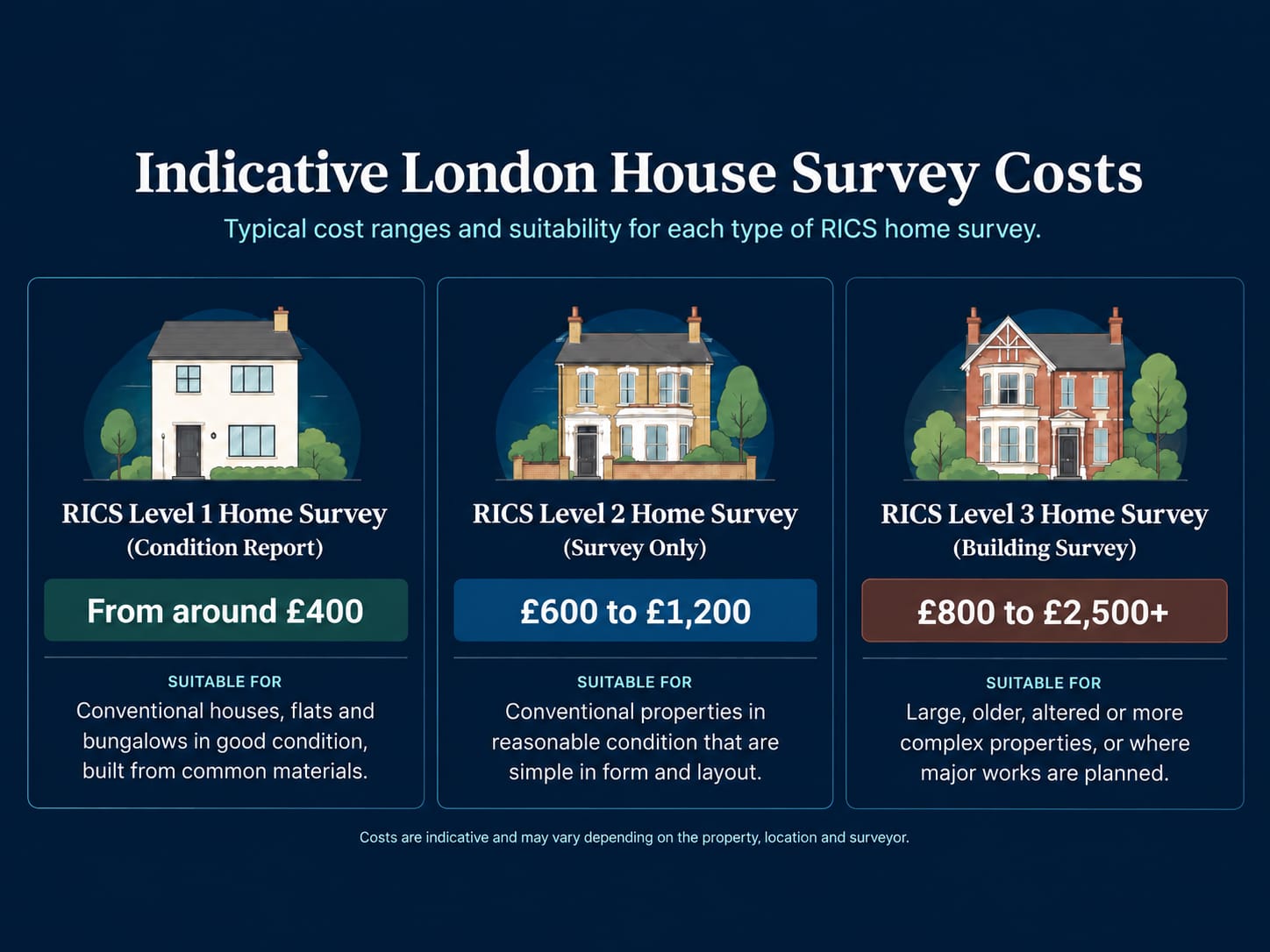
In London, a RICS Level 1 Home Survey typically starts from around £400, a Level 2 HomeBuyer survey usually costs between £600 and £1,200, and a Level 3 Building Survey generally runs from £800 to £2,500 or more. The figure depends on the size, age, condition and complexity of the property rather than on a fixed price list.
All figures on this page are indicative market ranges for London. The appointed surveyor confirms the actual fee once they have seen the property details.
Quick answer: what a house survey costs in London
| Survey type | Indicative London fee | Generally suited to |
|---|---|---|
| RICS Level 1 Home Survey (Condition Report) | From around £400 | Conventional houses, flats and bungalows in good condition, built from common materials |
| RICS Level 2 Home Survey, survey only (HomeBuyer) | £600 to £1,200 | Conventional properties in reasonable condition that are simple in form and layout |
| RICS Level 2 Home Survey, survey and valuation | Level 2 fee plus roughly £100 to £200 | The same properties, where you also want a market valuation and a reinstatement figure |
| RICS Level 3 Home Survey (Building Survey) | £800 to £2,500+ | Large, older, run-down, unusual or altered properties, or where major works are planned |
| Lender's mortgage valuation | Roughly £150 to £400, sometimes free with the mortgage product | Not a survey. Carried out for the lender, not for you |
London fees generally sit above national averages. National 2026 guides put a Condition Report at roughly £300 to £500 and a HomeBuyer Report at £400 to £900, and London sits at or above the top of those ranges for most property types.
What you are actually paying for
It helps to understand how surveyors arrive at a number, because it explains why two similar-looking flats can be quoted differently.
RICS is explicit that a surveyor bases the fee on how much time is needed to provide the level of service required, plus associated business costs such as travel and overheads. Price is a function of hours, not a percentage of the purchase price.
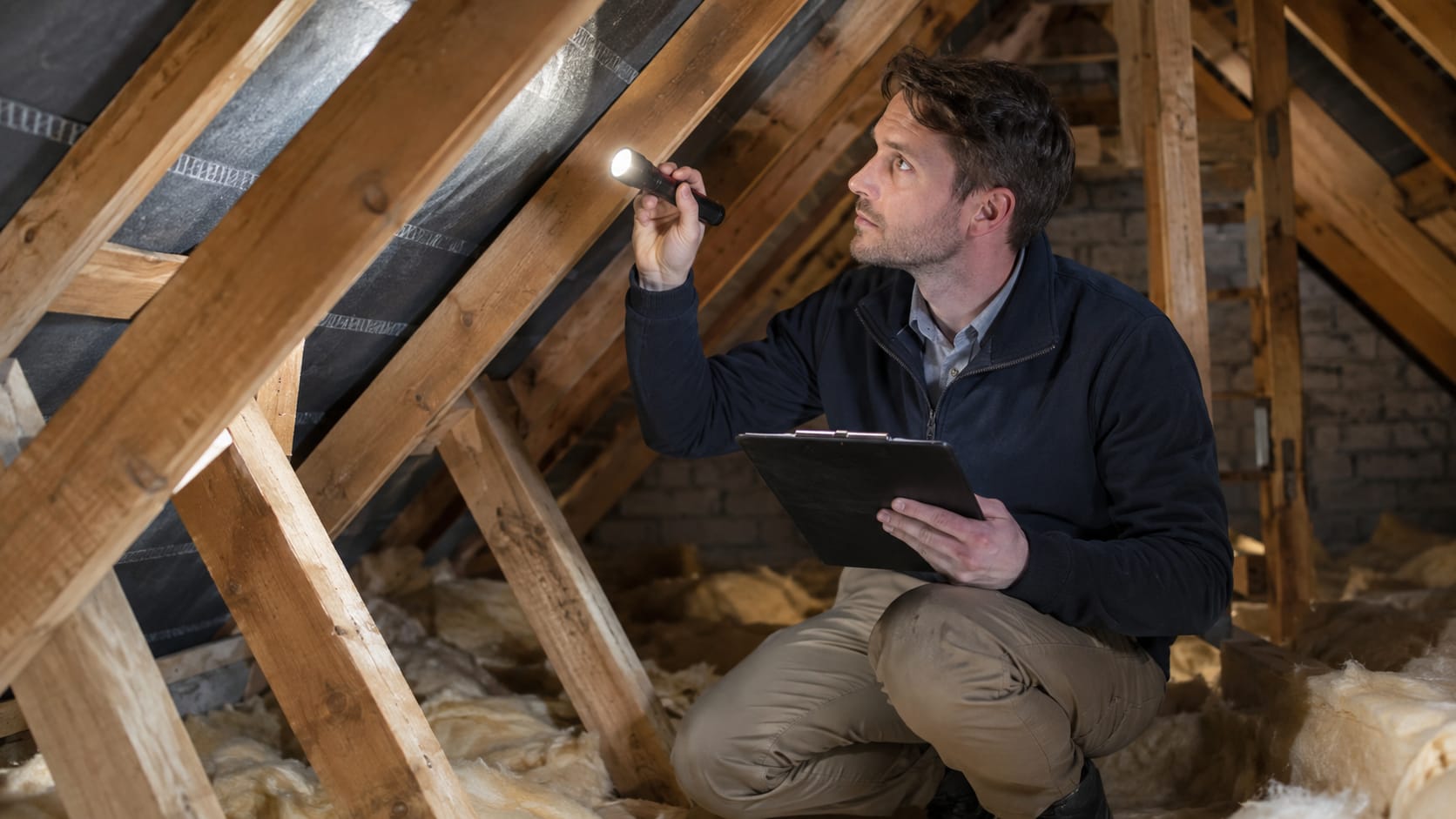
That is why the same property can carry three different fees depending on the level you choose. A Level 1 inspection is shorter and the report is briefer. A Level 3 involves a longer and more detailed inspection covering a wider range of issues, including more thorough consideration of the roof space, grounds, floors and services, plus written repair options and timelines. The inspection itself usually takes somewhere between two hours and a full day, and longer for very large properties.
Property value does still correlate with price, but mostly because higher-value homes in London tend to be larger, older or more heavily altered, and because the surveyor carries more professional liability.
What pushes a London survey fee up
- Size and number of rooms. More floor area and more rooms means a longer inspection and a longer report.
- Age and construction. Pre-1919 stock is built differently from modern housing, and assessing solid walls, timber, original roof structures and historic repairs takes longer. The government's buying guide specifically warns that you should check your surveyor is qualified to assess properties built before 1919.
- Alterations and extensions. Loft conversions, rear extensions, knocked-through ground floors and basement works all add inspection time, and the surveyor will want to see evidence that consents were obtained.
- Condition. A property showing cracking, damp staining, failed pointing or a tired roof covering needs more assessment and more written explanation than one in good order.
- Access. Flat roofs, restricted loft hatches, locked outbuildings, tenanted properties and awkward parking all add time.
- Leasehold complexity. Flats in converted period buildings often need the surveyor to consider the wider building and common parts, not just the demised flat.
- Turnaround. Compressed timescales sometimes carry a premium, particularly where a chain is under pressure.
Across London, ground conditions are a recurring factor. Large parts of the capital sit on London Clay, which shrinks and swells with moisture content, so historic movement, older repairs and nearby trees are all things a surveyor will look at carefully on a period terrace. That assessment takes time, and time is what you are paying for.
Level 1 cost in London
Level 1 is the least expensive RICS Home Survey and, in RICS's own description, is typically the lowest-priced option, aimed at conventional properties and newer homes. In London, budget from around £400.
It describes the condition of the property, identifies risks and potential legal issues, and highlights urgent defects. What it does not generally do is advise you on how to manage those defects. That limitation is the reason most London buyers move up a level.
If you are buying a recently built flat in good condition and you mainly want a professional second opinion, the RICS Level 1 Home Survey can be enough.
Level 2 cost in London
Level 2, still widely called the HomeBuyer Report, is the most common choice for London buyers. Expect £600 to £1,200 in most cases.
RICS describes it as most suitable for conventional properties in reasonable condition that are simple in form and layout, meaning a property without multiple alterations or extensions. Alongside everything in Level 1, it adds a more extensive roof space and drainage chamber inspection, and advice on defects and the repairs or maintenance that may be needed.
There are two versions, and the difference matters when you compare quotes. Survey only gives you the condition report and advice. Survey and valuation adds a market valuation and an insurance reinstatement figure, which typically adds somewhere in the region of £100 to £200.
If a quote looks unexpectedly high or low against another, check which version you are being quoted for. Our detailed breakdown of Level 2 HomeBuyer survey costs in London sets out typical fees by property size.
Level 3 cost in London
A Level 3 Building Survey is the most detailed RICS Home Survey. In London it generally runs from £800 for a smaller flat to £2,500 or more for a large or period property.
RICS positions it for large, older or run-down properties, buildings that are unusual or altered, and situations where you are planning major works. It establishes how the property is built and what materials were used, describes visible defects and the potential problems posed by hidden ones, sets out repair options with a timeline, and explains the consequences of not carrying out the work.
Given how much of London's housing stock is Victorian, Edwardian or converted, a large share of buyers here end up at this level.
The page on what a Level 3 Building Survey costs in London breaks the range down by property type.
Get a survey quote
If you are not sure which level covers what you need, tell us about the property and we will help you work it through before you book.
A mortgage valuation is not a survey
This is the most expensive misunderstanding in the whole process.
A mortgage valuation is a limited check carried out so your lender can confirm the property is worth what they are lending. It is for the lender's benefit, not yours.
The government's guide to buying a home states this plainly: a valuation does not protect you if something goes wrong with the property, and it may not even involve a physical inspection. There may be problems that would be costly to put right and that will not appear in the valuation report at all.
A valuation typically costs somewhere around £150 to £400, and some mortgage products include it at no charge.
That free valuation is the reason many buyers skip a survey, and it is the reason some of them inherit a roof they did not budget for.
If you need a standalone valuation as well as a condition survey, the lender's mortgage valuation is a separate piece of work with a separate fee.
An Energy Performance Certificate is not a survey either. It assesses the elements that affect energy efficiency and assumes they are all working correctly.
How to choose the level without overpaying
Be careful with the age rules you will see repeated online. Several cost guides state that RICS recommends a Level 2 survey for homes built after 1900, or something similar. RICS guidance says no such thing.
What RICS actually says is that the appropriate level depends in most cases on the age, size, condition, complexity and originality of the property. Age is one factor among five, not a threshold.
In practice that means asking:
- Age and construction. Is it built from common modern materials, or solid-wall Victorian brick, timber frame, or something non-standard?
- Condition. Is there visible cracking, damp, movement or a roof near the end of its life?
- Size and layout. Is it simple in form, or a large or awkwardly configured property?
- Alterations. Loft conversion, extension, structural openings, basement dig?
- Your plans. Are you intending major works after completion?
A tidy 2015-built flat in reasonable order and a heavily extended Victorian terrace on clay are not the same job, even at the same asking price. A 1930s semi that has never been altered may be fine at Level 2, while a converted warehouse flat of the same age may not.
If you are weighing the two most common options, our Level 2 vs Level 3 survey comparison works through the decision in detail.
If you are genuinely unsure, describe the property to a surveyor before you book. RICS advises exactly this, and a five-minute conversation is cheaper than the wrong level of survey.
Is the fee worth it?
A survey is not a legal requirement in England and Wales, but it is strongly recommended, and the government's buying guide is unambiguous that you should strongly consider having one carried out.
The practical argument is straightforward. If the report identifies significant issues, you can ask the seller to fix them before you buy, renegotiate the price to reflect the cost of the work, or withdraw altogether.
Against a London purchase price, a survey fee is a small proportion of the transaction, and the report gives you a written basis for any of those conversations.
If the survey comes back clean, you have paid for the information that the property is in the condition you assumed. That is still worth having before you commit.
How to compare survey quotes in London
- Confirm which RICS level is being quoted, and for Level 2, whether it includes a valuation.
- Check that the surveyor holds AssocRICS, MRICS or FRICS status. Reports under the RICS Home Survey Standard may only be produced by an RICS member with appropriate experience.
- Ask whether the surveyor has experience of your property's type, age and construction, particularly for pre-1919 stock or non-standard construction.
- Ask what the turnaround is from inspection to report.
- Ask whether a follow-up conversation about the report is included. Reading condition ratings without context is difficult.
- Get more than one quote. RICS recommends shopping around rather than automatically using the firm suggested by your bank or estate agent.
Frequently asked questions
How much does a house survey cost in London in 2026?
Most London buyers pay between £600 and £1,200 for a Level 2 HomeBuyer survey and between £800 and £2,500 or more for a Level 3 Building Survey. A Level 1 Condition Report starts from around £400. All figures are indicative and confirmed by the appointed surveyor.
Why are survey fees higher in London than elsewhere?
Partly the housing stock and partly the market. London has a high proportion of period, converted and altered properties, which take longer to inspect and report on, and surveyor overheads and travel costs in the capital are higher.
Is a Level 2 survey enough for a London flat?
Often yes, for a conventional flat in reasonable condition that is simple in form and layout. A flat in a converted period building, one with significant alterations, or one showing visible defects may warrant a Level 3 instead.
Does my mortgage valuation count as a survey?
No. It is carried out for the lender to confirm the property is adequate security, it does not assess condition in the way a survey does, and it does not protect you.
Who pays for the survey?
In England, Wales and Northern Ireland the buyer pays for the survey and receives the report. Scotland works differently, as the seller arranges a Home Report before marketing.
How long does the survey itself take?
Generally between two hours and a full day depending on the size and complexity of the property, and several days for very large properties. The report follows afterwards.
When should I book it?
Usually once your offer has been accepted. Some buyers wait until the lender's valuation confirms the borrowing figure. Surveyors get booked up, so do not leave it late.