What Happens After a Bad Survey Report?
Most survey reports find something.
It is common for older properties to receive a mixture of condition ratings, including some rating 2 items and occasionally rating 3 findings. That is not by itself a reason to pull out.
Before you exchange contracts you have four main options: proceed anyway, ask the seller to carry out the work, renegotiate the price, or withdraw.
Everything below assumes you have not yet exchanged contracts.
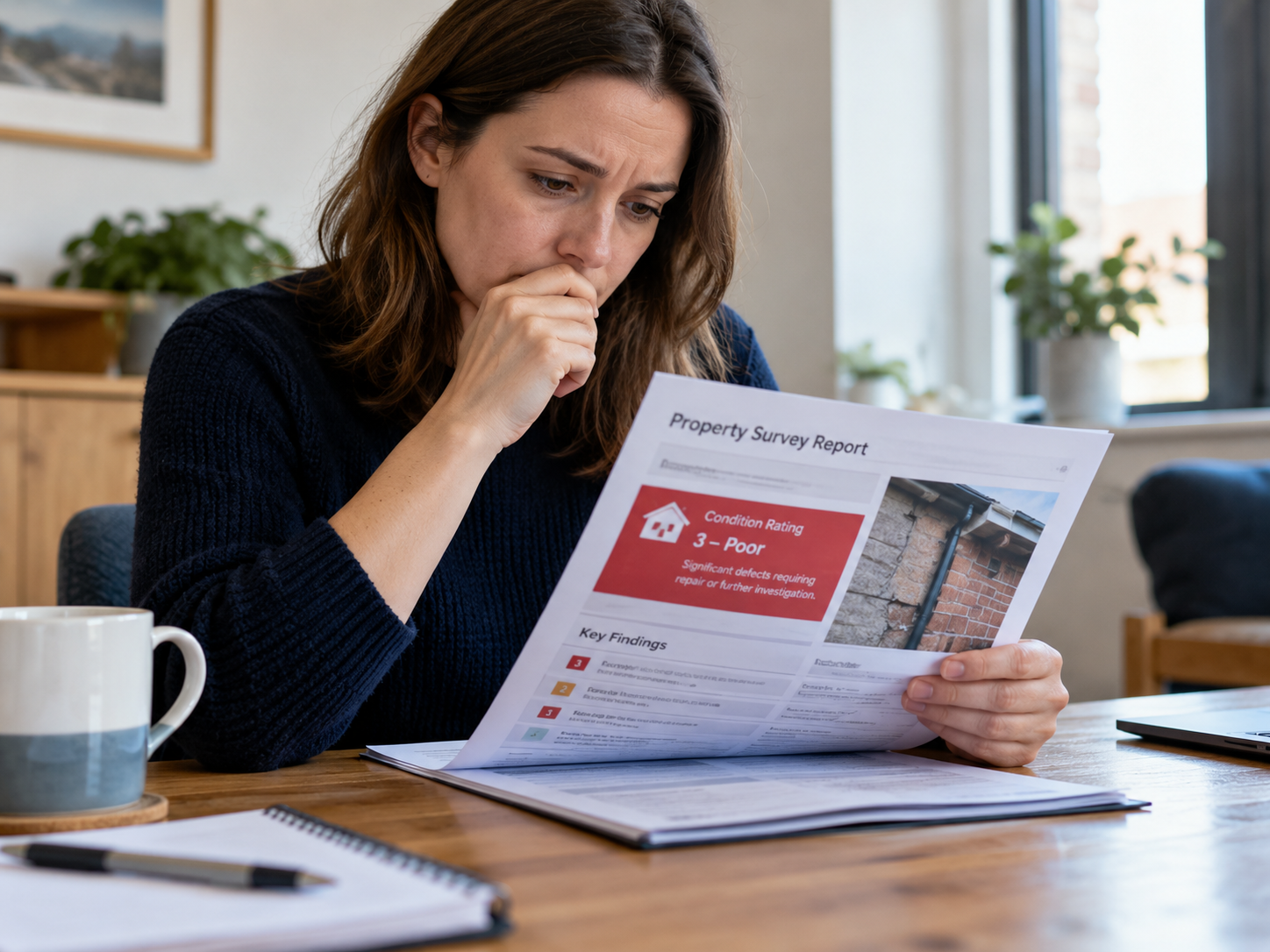
First, work out how bad it actually is
Survey reports are written to identify problems.
Read end to end, a report on an older or period London property can sometimes sound alarming.
That is the document doing its job, not necessarily a verdict on the purchase.
Three things are worth doing before you make any decision.
Read the full entries, not just the rating or summary
Where an element contains several different parts, RICS report guidance says the part with the worst condition rating is described first, followed by the condition of the other parts.
A sound main roof with a failing flat roof over an extension can therefore look more alarming at first glance than the full entry shows.
If you are unsure how the scoring works, our guide to what the condition ratings actually mean covers ratings 1, 2, 3 and NI.
Talk to the surveyor
You have already paid for their professional assessment.
Ask how serious each significant item is, what may be causing it and what they would want to know next.
You can also ask them to put the findings in context against other properties of a similar age and type.
What they will not do is make the purchasing decision for you.
A RICS surveyor reports within the scope of the survey level you commissioned. More detailed advice about repairs, maintenance and remedial options is provided at the higher survey levels.
The final purchase decision remains yours.
Separate what is known from what is unknown
This is one of the most useful distinctions you can make.
Diagnosed problems and uncertain ones need different responses
A serious finding can broadly fall into two categories.
The surveyor has identified the defect
They can see what is wrong and describe it.
Examples might include a failed roof covering, deteriorated pointing, rotten joinery or an outdated electrical installation.
Where the work required is reasonably understood, the next useful step is often to obtain quotations.
The surveyor cannot yet reach a conclusion
They have seen something concerning but cannot determine its significance without opening up, testing or specialist expertise.
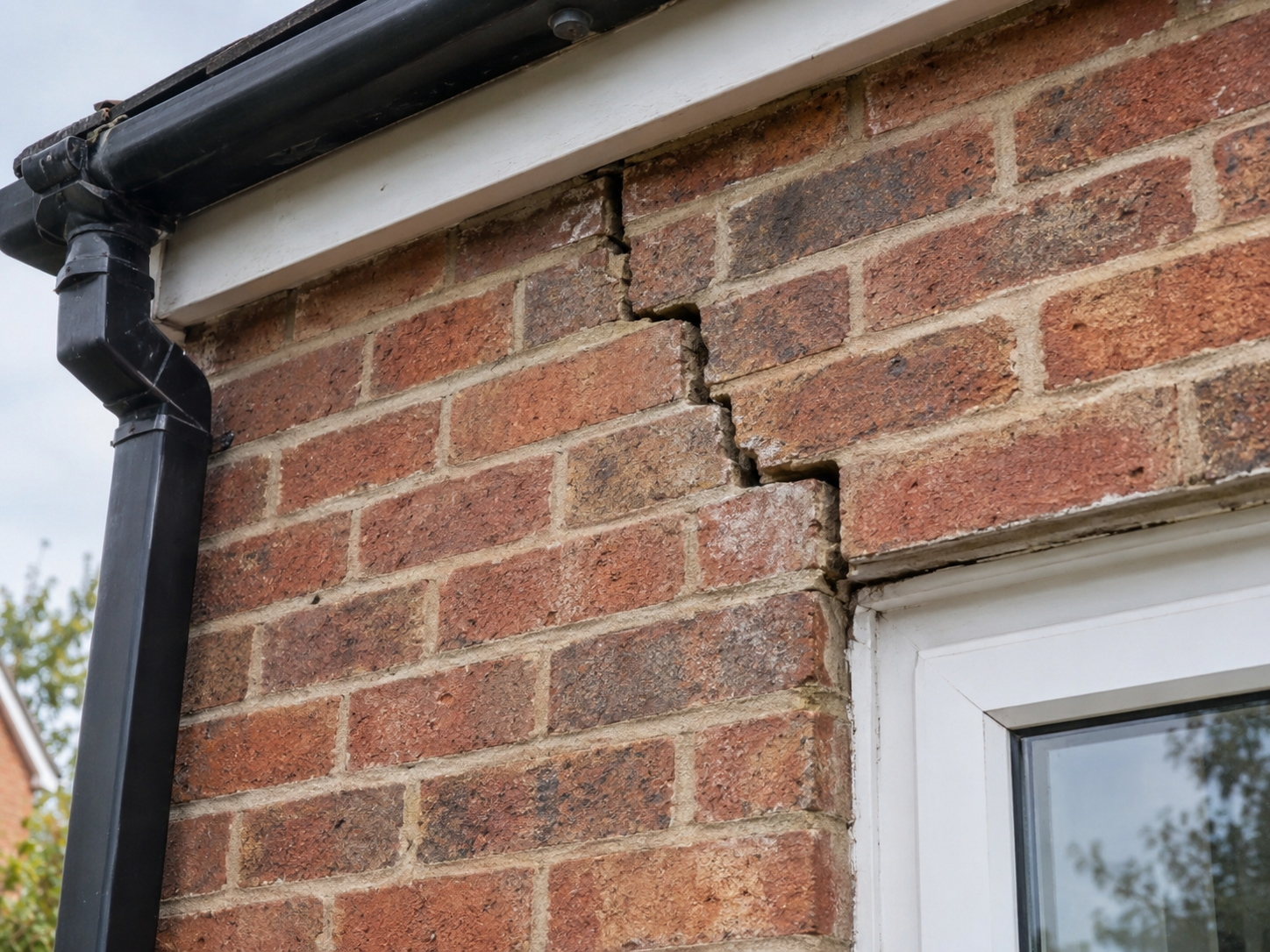
Cracking that may or may not indicate ongoing structural movement is a classic example.
In that situation, asking contractors to price remedial work before the underlying issue has been properly investigated may produce unreliable or inconsistent quotations.
The next step is investigation first, pricing second.
The same principle applies to anything recorded as NI, meaning not inspected.
NI represents an area the surveyor could not inspect rather than confirmation that there is no problem.
A home survey is a visual inspection with practical limits.
Our guide to the limits of a visual inspection explains what falls outside the standard inspection.
Getting further investigation
Where the report recommends further investigation, it should explain what is needed and give appropriate guidance about the type of professional or specialist required.
Follow the report's recommendation rather than guessing.
Depending on the finding, this may include:
- Suspected structural movement or subsidence: an appropriately qualified structural engineer or other relevant specialist.
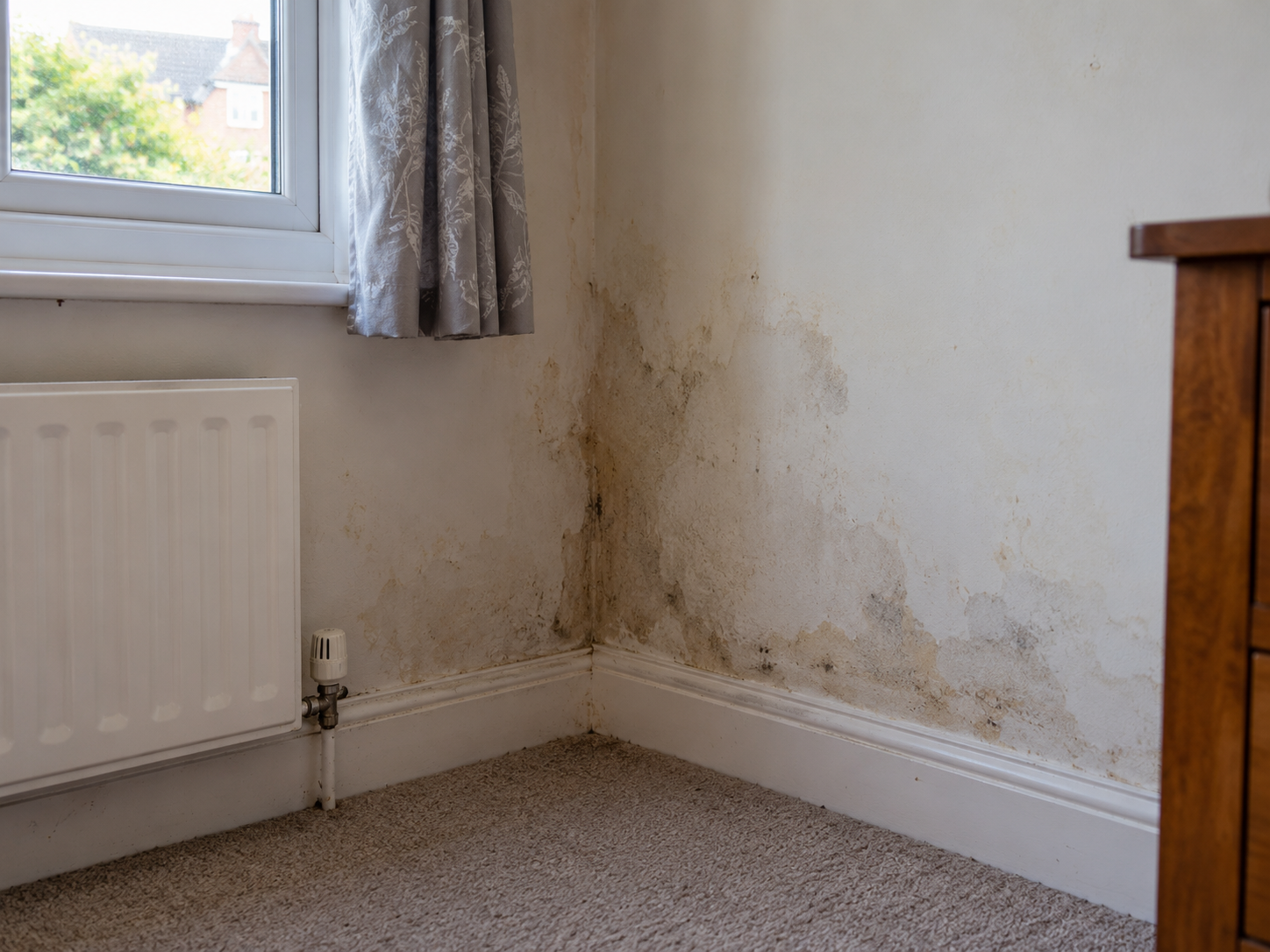
- Damp where the cause is unclear: an independent investigation capable of identifying the underlying cause rather than simply selling a treatment.
- Electrical installation: an appropriately qualified electrician, because a standard home survey does not test the electrical installation.
- Drainage: an appropriate drainage specialist, potentially including CCTV investigation where recommended.
- Suspected asbestos-containing materials: an appropriately competent asbestos specialist.
If the report flags cracking, our guide to cracks in walls and what they can mean explains some of the issues surveyors consider.
The same principle applies to damp.
One more option is worth knowing about.
If you commissioned a Level 1 or Level 2 survey and the report repeatedly recommends further investigation because the property is particularly complex, older, altered or run down, you may want to discuss with the surveyor whether a more detailed Level 3 assessment would be appropriate.
A Level 3 Building Survey is designed for more complex properties and provides greater detail about defects, likely causes, repair options and priorities.
Then get written quotes
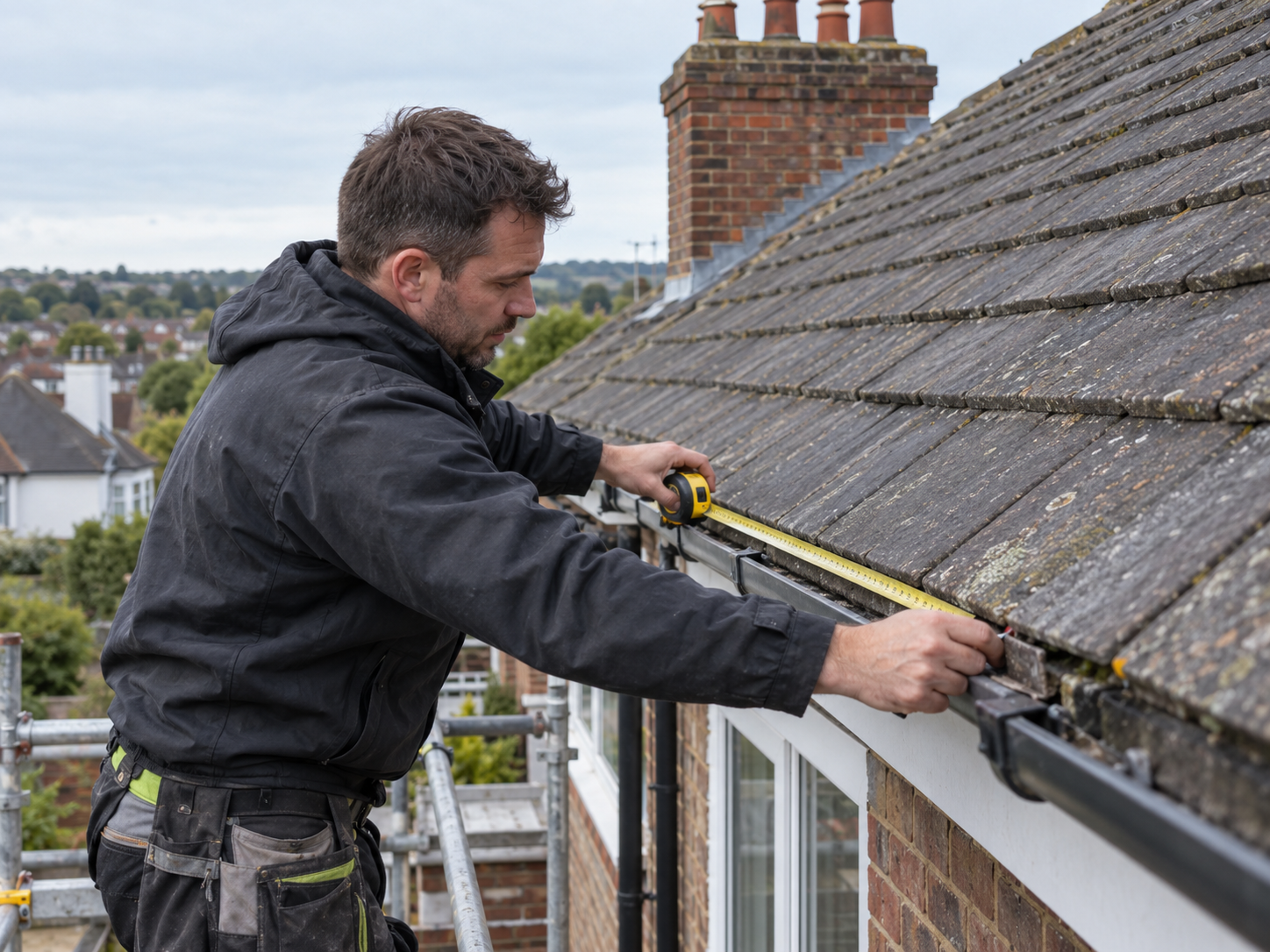
Once you understand what you are dealing with, obtain written quotations from experienced contractors for significant repair work before becoming legally committed.
RICS recommends obtaining quotations from at least two experienced contractors where appropriate.
Written quotes matter for two reasons.
First, they give you a better idea of the likely real-world cost.
Second, if you decide to renegotiate with the seller, documented quotations provide stronger evidence than simply presenting an extract from the survey.
Also establish whether proposed work may require building regulations approval, planning permission, listed-building consent or another form of approval, because that can affect both cost and timescale.
Your four options
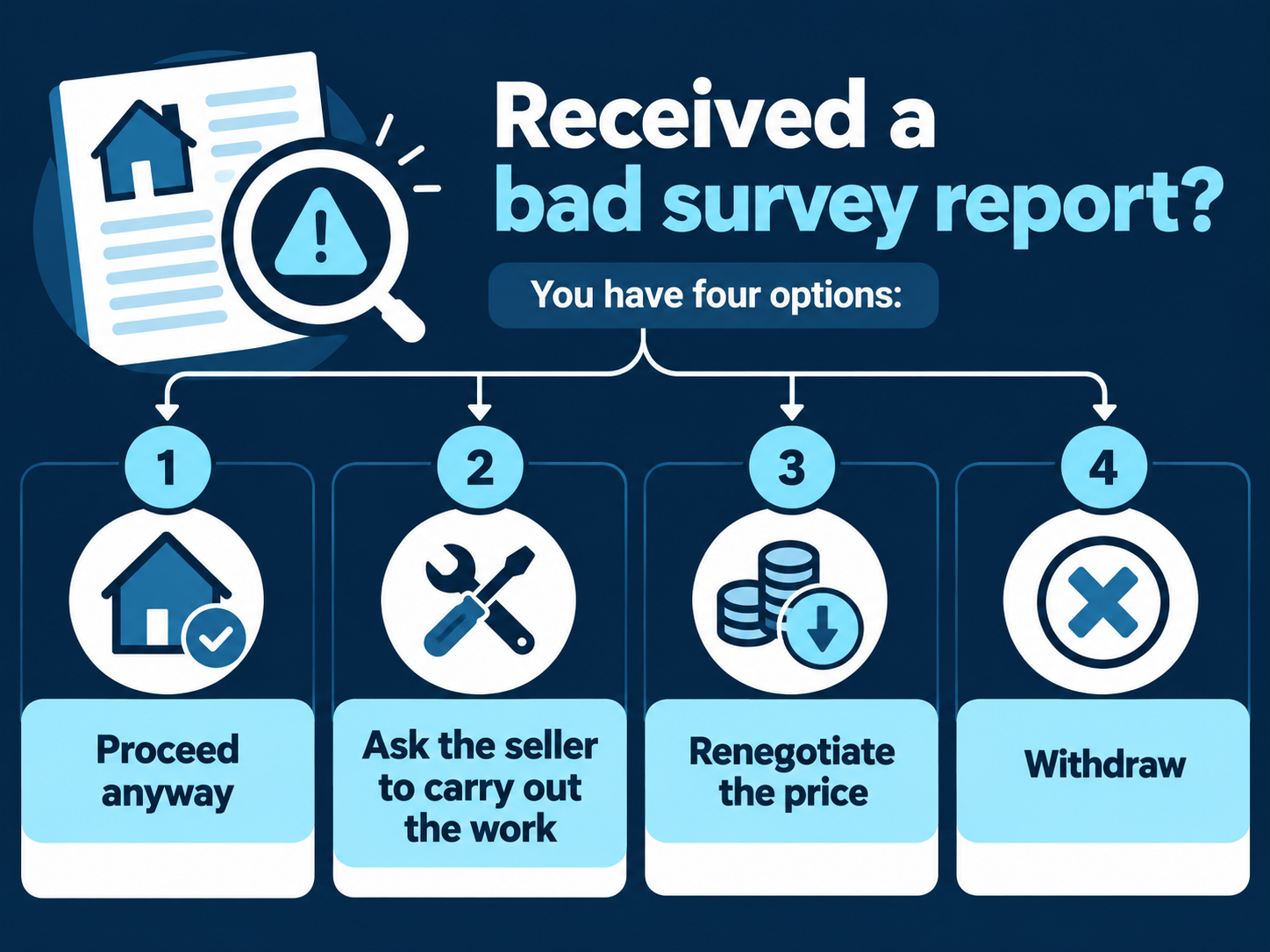
| Option | When it fits | What to know |
|---|---|---|
| Proceed as agreed | The findings are manageable and you remain comfortable with the purchase. | Allow for repairs and maintenance in your post-completion budget. |
| Ask the seller to carry out the work | Clearly defined work is required and you would prefer it to be completed before purchase. | You may have less control over the contractor and standard of work. Agree any arrangement properly through the legal process. |
| Renegotiate the price | Significant defects have been identified and you have evidence of likely repair costs. | The government's home-buying guidance confirms that buyers may renegotiate where a survey identifies significant problems. Relevant survey information and quotations can support the discussion. |
| Withdraw | The costs or risks are beyond what you are willing or able to accept. | Before exchange in England and Wales, you can normally withdraw from the transaction, although you will generally lose costs already incurred such as survey, conveyancing and search fees. |
Which option is right depends on the seriousness of the findings, the likely costs, your finances and how the seller responds.
The exchange of contracts line
This is the point that governs much of what happens next.
In England and Wales, an offer is not legally binding until contracts are exchanged.
Before exchange, you can normally renegotiate or withdraw.
You may lose costs you have already incurred, including survey fees, searches and legal costs to date.
After contracts are exchanged, both buyer and seller are legally committed.
Withdrawing after exchange can have serious financial consequences, potentially including loss of the deposit and liability for other losses.
Your conveyancer should also confirm the buildings-insurance position before exchange and explain when responsibility for insuring the property passes to you.
Survey investigations, specialist reports and any renegotiation should therefore be dealt with before exchange wherever possible.
If important findings arrive late and you need further time to investigate properly, raise that with your conveyancer and estate agent rather than feeling pressured to exchange before you understand the issue.
The government's guide to buying a home notes that an offer can be renegotiated before exchange where significant problems are identified, although changing an offer late in the transaction can delay the sale or cause the transaction to fall through.
A significant survey finding can provide a legitimate reason to revisit the price.
Does a bad survey affect my mortgage?
It can.
Your lender generally carries out its own valuation.
That valuation is for the lender's purposes and is not a substitute for your own survey.
If the lender or its valuer identifies serious issues or forms a different view of the property's value, possible outcomes may include:
A down valuation
The lender values the property below the agreed purchase price and bases its lending decision on the lower figure.
This may leave you needing to contribute more cash, renegotiate the purchase price or reconsider the transaction.
A retention
In some cases a lender may hold back part of the mortgage advance until specified works have been completed.
A declined or changed lending decision
Serious structural problems, unusual construction or other significant risks can affect whether a lender is willing to lend and on what terms.
Speak to your broker or lender if significant survey findings emerge.
Their position may affect what you can realistically agree with the seller.
Insurance deserves similar attention.
Where a report raises possible subsidence, structural movement or another significant risk, consider discussing the findings with an insurer or broker before exchange so that you understand the potential insurance implications.
Issues for your conveyancer
Not everything identified in a survey is a building-repair issue.
RICS reports can identify matters that should be referred to your legal adviser.
Examples may include:
- alterations where approvals or documentation need checking
- boundary questions
- rights of access
- shared drainage
- ownership or maintenance responsibilities
- evidence of extensions or conversions requiring legal investigation
The surveyor is not acting as your legal adviser and does not determine legal rights from title documents.
Relevant issues should therefore be passed to your conveyancer.
This can be particularly important with London properties that have been extended, converted or altered.
When walking away is the right call
A bad survey does not automatically mean the purchase should end.
But withdrawing can be a sensible decision where:
- the cost of essential work is beyond what you can fund and the seller will not adjust the price
- the report identifies a serious risk that further investigation has not resolved
- your lender will not lend on terms you can meet
- appropriate insurance cannot be obtained on acceptable terms
- the property would require a level of work or risk you are not comfortable taking on
Walking away before exchange may mean losing money already spent on surveys, searches or legal work.
But that can still be considerably less costly than purchasing a property with problems you cannot comfortably resolve.
Frequently asked questions
Can I pull out after a bad survey?
Yes, if you have not exchanged contracts in England and Wales. You will normally lose costs you have already incurred, such as survey, search and legal fees, but the transaction is generally not legally binding until exchange.
Will I lose my deposit?
If you withdraw before exchange, you would not normally have paid the contractual exchange deposit. After exchange, withdrawing can have serious financial consequences, including potentially losing your deposit and being liable for other losses.
Who pays for repairs found in a survey?
There is no automatic rule that the seller must pay. It is a matter for negotiation. The seller may agree to carry out work, reduce the price, decline to change anything, or propose another arrangement. You then decide whether to proceed.
Is it normal for a survey to find problems?
It is common for surveys, particularly on older properties, to identify defects or maintenance issues. The important questions are how serious they are, what further investigation is required and what the likely financial implications are.
Should I ask the surveyor whether to buy?
Ask the surveyor to explain the seriousness of their findings, what they believe may be causing them and what further investigation they recommend. The final decision about whether to purchase the property remains yours.
Can a bad survey affect my mortgage offer?
Potentially. Significant defects, valuation issues or unusual construction can affect a lender's valuation or lending decision. Speak to your mortgage broker or lender if major findings emerge.
How long will this add to my purchase?
It depends on what needs investigating. Specialist reports, contractor quotations and further negotiations can take additional time. Tell your conveyancer and estate agent early if further investigation is required.
Further reading and sources
Get a survey quote
This guide is general information and is not legal, financial, mortgage or insurance advice.
If you already have a survey report and are concerned about specific findings, speak to the surveyor who inspected the property first. They are best placed to explain their own observations and recommendations.
If you are still arranging your survey, Property Survey Experts can help you understand your survey options and connect you with an independent surveying professional.