How Long Does a House Survey Take?
A house survey inspection generally takes a few hours to a full day, depending on the level, size and complexity of the property. A straightforward Level 1 inspection may be shorter, while particularly large properties can take several days.
The written report may follow within a few working days to around two weeks, depending on the firm and the work involved. Confirm the expected inspection date and report turnaround before booking.
The question hides three different ones, so it is worth separating them.
Three questions in one
| What you are asking | Short answer |
|---|---|
| How long is the surveyor at the property? | Often a few hours to a full day, with shorter or longer inspections depending on the property and level. |
| How long until the report arrives? | Allow a few working days to around two weeks as a broad guide, but confirm the firm's timetable. |
| How much time does this add to my purchase? | It may run alongside conveyancing, but booking delays, access problems and further investigations can affect the timetable. |
The third is often the practical concern, and it is covered further down.
How long the inspection takes
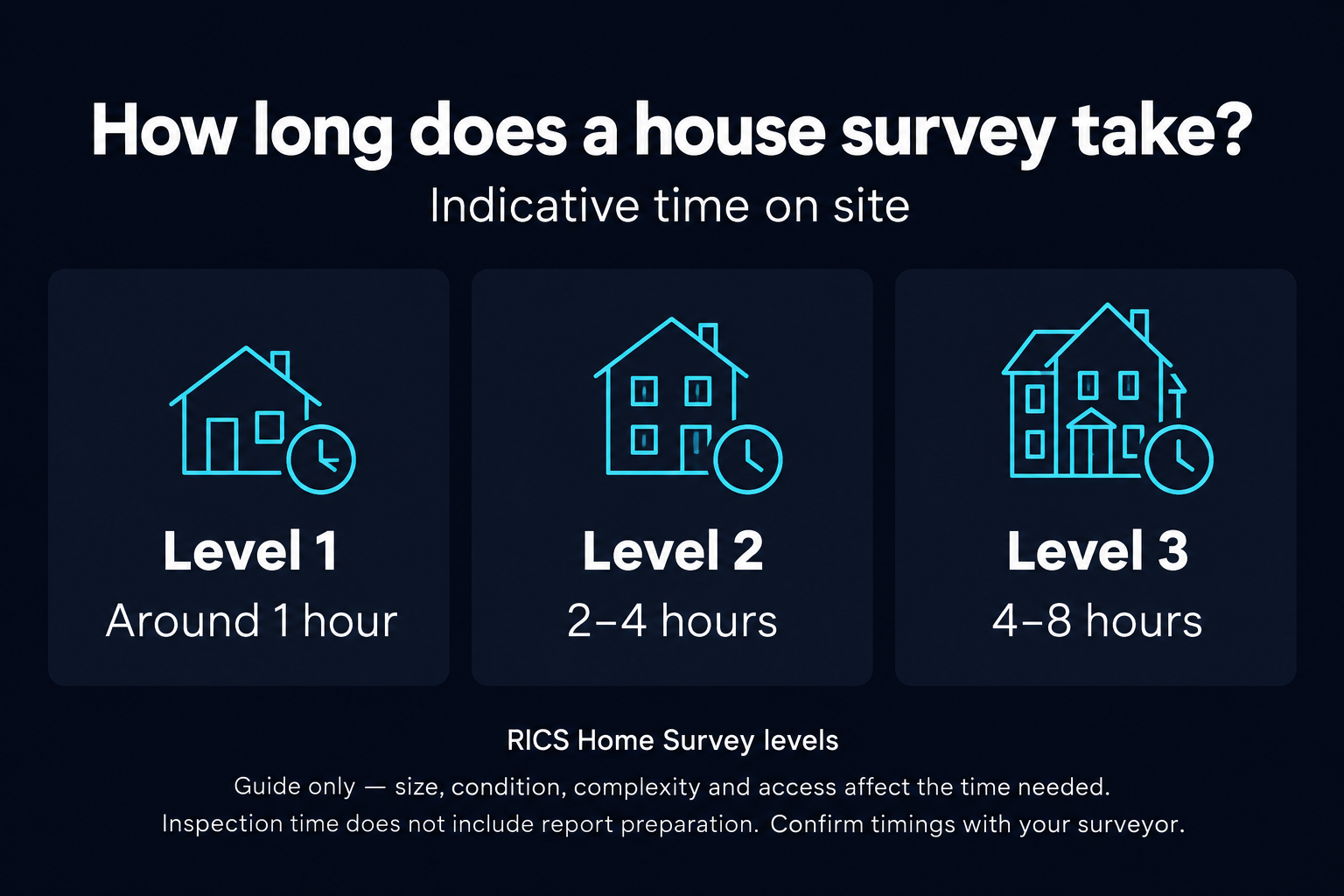
RICS, the Royal Institution of Chartered Surveyors, gives broad guidance that an RICS Home Survey inspection generally takes between two hours and a full day. Particularly large properties may take several days.
That is general guidance rather than a fixed duration for each survey level. A straightforward Level 1 inspection may be shorter.
| Survey level | Indicative time on site |
|---|---|
| Level 1 Home Survey | Around an hour for a straightforward property, although this varies. |
| Level 2 Home Survey | Commonly two to four hours. |
| Level 3 Home Survey | Commonly four to eight hours, with longer inspections possible for particularly large or complex properties. |
A word on those numbers: published estimates differ between firms. These ranges are practical guides, not official RICS minimum or maximum inspection times. Ask your surveyor what to expect for your property, and do not judge the quality of a survey by the clock alone.
What drives the variation is straightforward enough: floor area, number of rooms, age, alterations and extensions, lofts and cellars, outbuildings, and how much of the property is accessible. Our guide to what the surveyor is actually doing in that time explains why a deeper level can take longer.
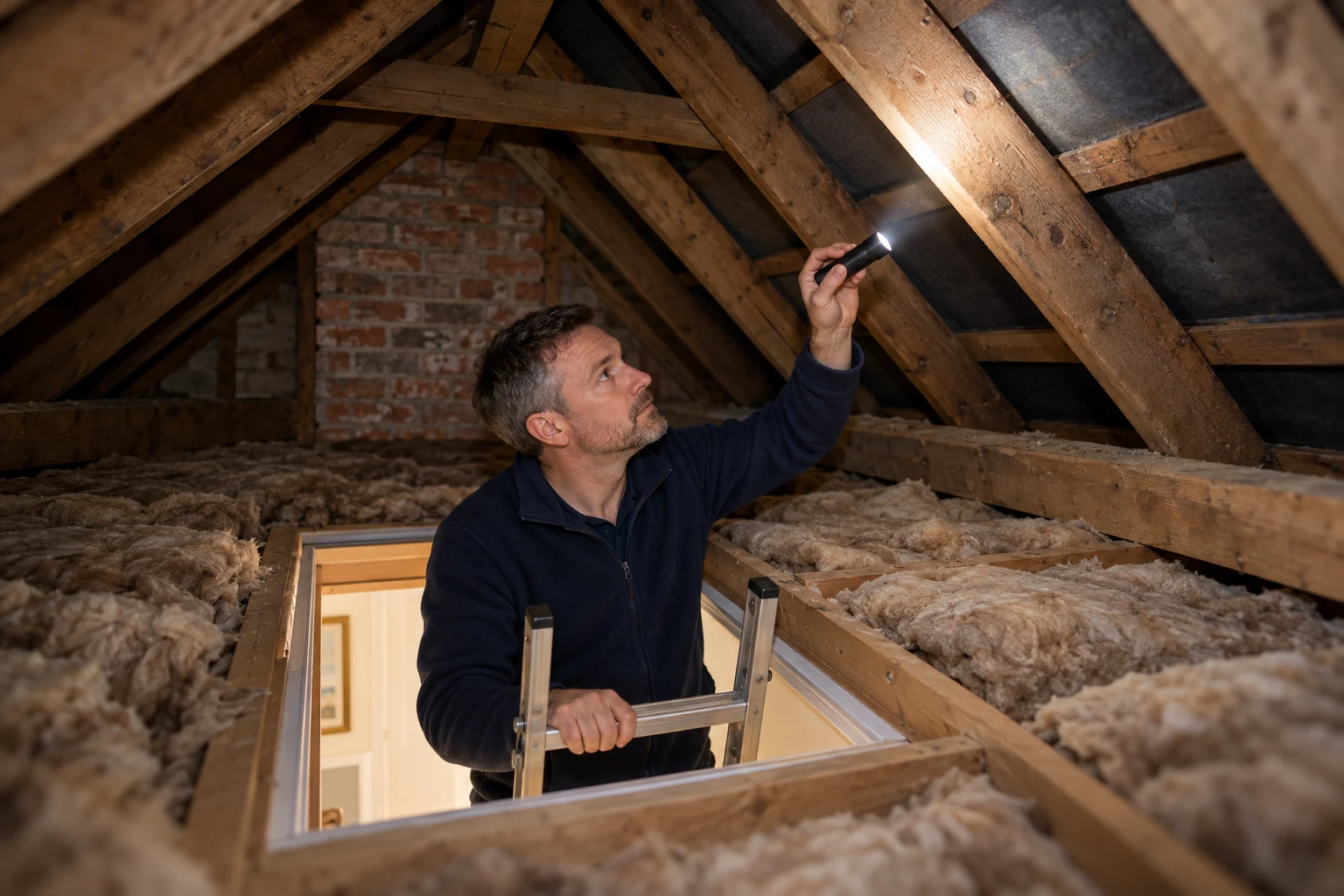
A RICS Level 2 Home Survey includes a more extensive visual inspection than Level 1, including closer inspection of the roof space where safe and accessible. A Level 3 survey goes further in its inspection and analysis of defects, causes and repair options, which can require more time both on site and when preparing the report. Our guide to the difference between the two levels sets out the scope.
How long until you get the report
Report turnaround varies by firm, survey level, property complexity and workload. A few working days to around two weeks is a broad planning guide, not a delivery promise.
A Level 3 report may take longer to prepare because of the additional detail and analysis, but it is not a rule that every Level 3 report arrives later than every Level 2 report.
Ask for the expected turnaround when you instruct the surveyor and get it confirmed, particularly if you have a proposed exchange date. Check whether the estimate is measured in working days from the inspection.
Two things are worth knowing.
A delay does not automatically mean bad news. Workload, additional checks or complex findings can all affect delivery. If the agreed date passes, ask the firm what is causing the delay and request an updated date.
You may be able to hear the main findings sooner. Some surveyors offer a phone discussion before issuing the written report. Ask about this when you book. It can help you understand urgent concerns, but it does not replace reading the complete report and resolving necessary investigations before exchange.
How much time does a survey add to your purchase?
A survey does not necessarily add a separate block of time to the purchase. If arranged early, the inspection and report preparation can run alongside mortgage and conveyancing work.
However, the total time from instructing a surveyor to receiving the report is not fixed. It includes the wait for an appointment, access arrangements, the inspection and report preparation. Ask the firm to confirm both the inspection date and the expected report date.
Further investigations can add more time. A specialist has their own availability, contractor quotations may take time to obtain, and any renegotiation needs to be discussed with the seller while keeping your conveyancer informed. Our guide to what happens if the report finds something sets out the sequence.
Booking late leaves less room for those steps before exchange. The government's guide to buying a home warns that surveyors may be busy and advises buyers not to leave arrangements too late.
Our guide to when to book a house survey explains how to plan around your proposed exchange date and whether to wait for the lender's valuation.
Should you be there?
You do not normally need to attend the inspection.
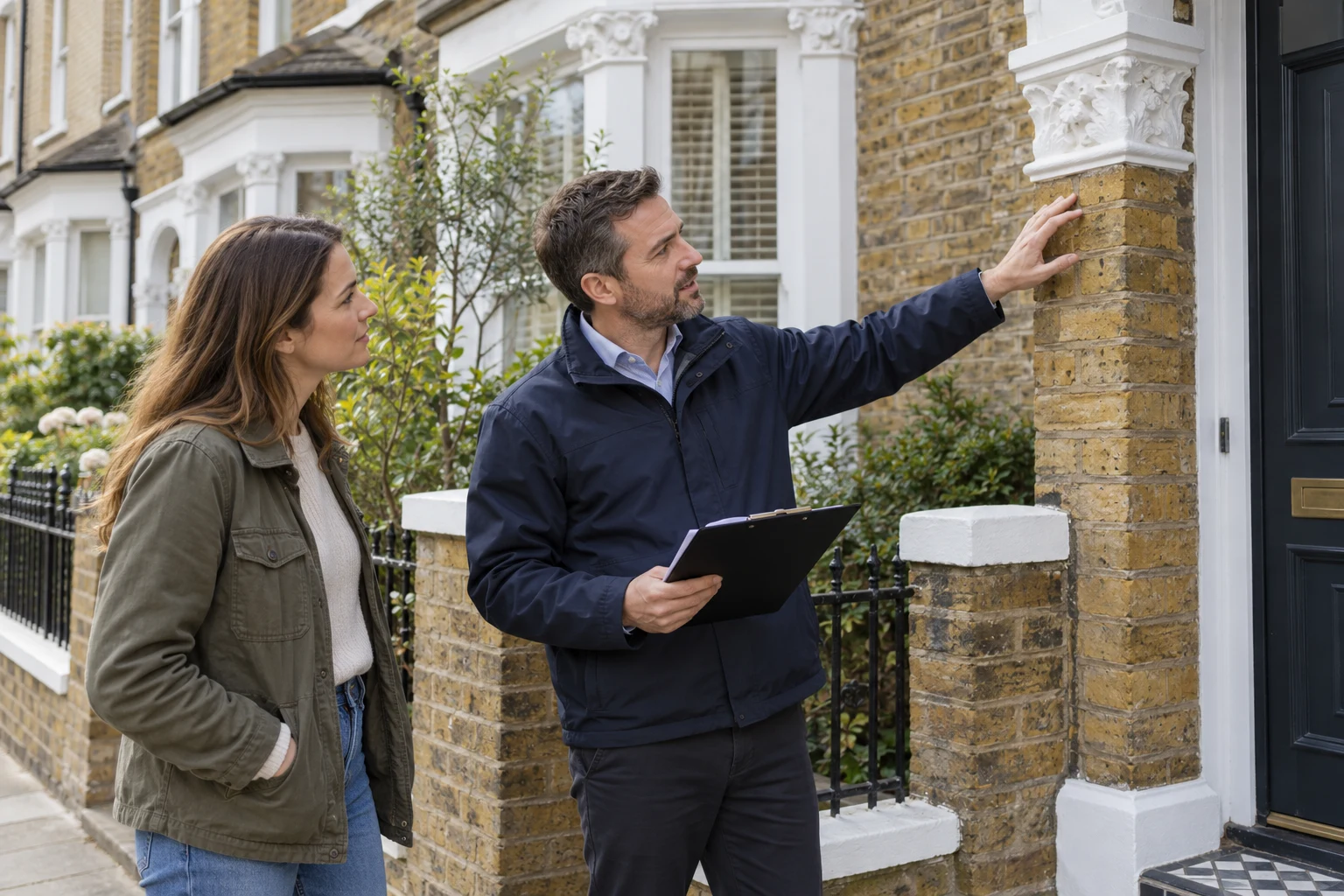
RICS notes that you may be able to visit the property at the same time as the surveyor to point out specific concerns. If you would like to attend, agree this in advance with the surveyor and whoever is arranging access.
Do not assume you can accompany the whole inspection or arrive without an appointment. A short conversation at an agreed time may be possible, but the surveyor needs to complete the inspection safely and without unnecessary interruption.
Either way, tell the surveyor about your concerns and planned alterations before the visit.
If you are the one living there
Sellers and tenants also need to plan around the inspection.
Allow the agreed appointment window rather than assuming the minimum duration. Where safe and practical, make sure the loft hatch is reachable, access to garages and outbuildings is arranged, and anyone with necessary keys is available. Keep access to meters, the consumer unit and the boiler clear.
Do not open electrical equipment, climb into unsafe spaces or move anything hazardous to prepare for the visit.
A standard visual survey does not normally involve moving heavy furniture or lifting fitted carpets, so you do not need to empty rooms. Ask the surveying firm what preparation is helpful.
Restricted access will be recorded and can limit the conclusions the surveyor is able to reach. It may also lead to recommendations for further investigation or a return visit.
Frequently asked questions
How long does a Level 2 survey take?
Commonly two to four hours on site, although the property's size, layout, condition and access can make it shorter or longer. Ask the surveying firm for an estimate specific to the property.
How long does a Level 3 survey take?
Commonly four to eight hours, with longer inspections possible for large or complex properties. RICS notes that particularly large homes can take several days. These are guides rather than fixed inspection requirements.
How long does a house survey take to come back?
A few working days to around two weeks is a broad guide. The firm, property and survey scope affect the turnaround. Confirm the expected delivery date when booking.
Why is my report taking longer than I expected?
Possible reasons include workload, property complexity, additional checks or access issues. A delay alone does not tell you whether the findings are serious. Contact the firm for an explanation and revised delivery date.
Do I need to be at the property?
Not normally. If you want to attend or discuss concerns on site, arrange this in advance with the surveyor and whoever controls access.
How long after the survey can I exchange?
There is no fixed waiting period. Review the written report, understand its limitations and resolve any investigations needed before committing. Your conveyancer must also confirm that the legal work, mortgage requirements and other arrangements are ready. A completed survey alone does not mean you are ready to exchange.
Can I get the findings faster?
Ask whether the surveyor can discuss the main findings before issuing the report. An early conversation may help, but it should not replace reviewing the written report and necessary follow-up before exchange.